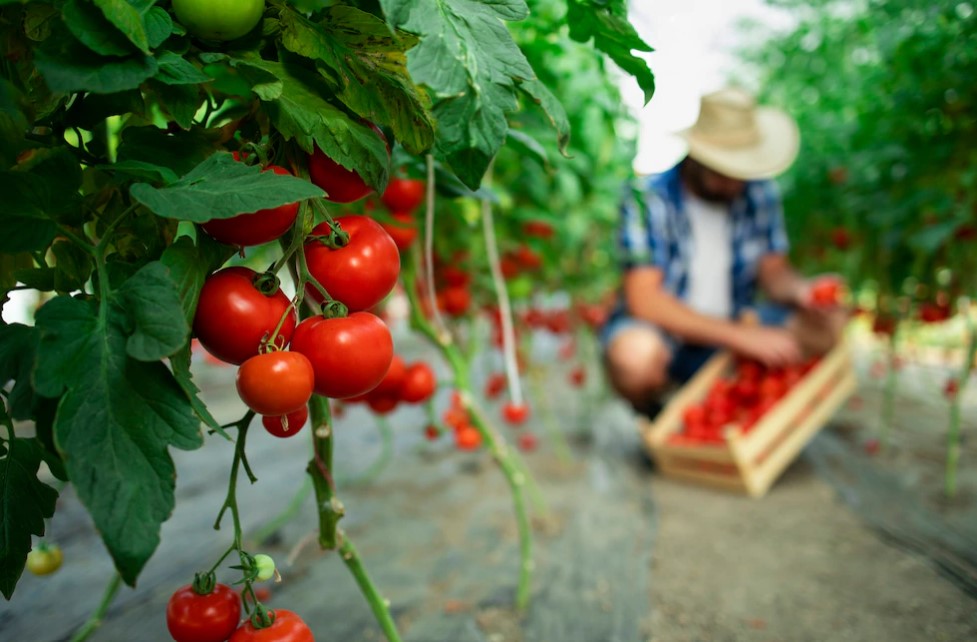
Covid-19 pandemic has been somehow controlled. People can now go out to work, for shopping, entertainment centers and the like. However, how business is conducted has completely changed. E-business has only got better attracting more shopping than before. The two biggest gainers in this transformational change in today’s post-pandemic supply chain are the farmers and the consumers.
Waste & Hunger
The truth is that approximately 30% to 40% of food that is produced gets wasted annually while 15% vegetables and fruits get squandered. A good number of people are found to sleep hungry on a daily basis. It is a sad fact that both hunger and waste co-exist together. During such pandemic times, food supply chain is considered a critical sector. Sourcing vegetables direct from farm is a better way to replenish exhausted items.
Managing supply chain
Throughout the pandemic period, the country managed to manage food supply chain without major hiccups. But waste figures clearly indicate taking necessary steps to make supply chain improvements. Perishable F & V (Food & Vegetable) is more about effective, safe fresh produce transportation to distribution centers from farms. It also involves sorting them to offer end-customers with good quality, error-free packaging. The best place to buy fresh vegetables is online farmers market.
Shelf life
Lifestyle, life quality, small families, health awareness, eating habits and working parents are transforming gradually consumption of perishable vegetables and fruits by middle class segment. Hence, in today’s F&V supply chain, ‘shelf life’ and fresh produce market prices remain a key variable. End-consumer behaviour has also been impacted significantly by the Covid pandemic. Recent closure of business due to the pandemic has compelled SMEs in F&V supply area to transition to B2C arena from B2B.
A necessity
This conversion is no longer considered to be an option, but an urgent need for SMEs to survive and sustain. Hence, enterprise owners especially in supply chain segment have moved swiftly to deliver fresh farm produce to homes directly. Online placement of orders, diverse payment options, attractive incentives offered, door delivery, availability of wide range of items, etc. have only promoted growth of e-business.
Key drivers
Digitization: Product flow visibility, order placement, payment, etc.
Freshness: Agri-produce lead time getting reduced from farm-kitchen.
Relatable, measurable unit: Switching from Kilograms to pieces or numbers.
Small, frequent orders: Small batches to reduce waste.
Produce quality: Enhanced understanding including alignment with customer expectations.
Customer orientation: Service provider responsiveness and volume-variety flexibility.
Healthy inventory turns: Low turn-around-time business.
Investment: Reduced complexity and cost-effective warehousing options.
Better ecosystem awareness: Less carbon footprint, recyclable packaging and low wastage.
Robust logistics and farmer engagement: Improving infrastructure and entrepreneurship.
Improving scale of operation
With increasing population, it is quite natural to increase scale of operation. Some risks do exist that needs to be focused upon and mitigated. It is equally vital to analyze the pain points faced in today’s F&V supply chain using cost-effective technology, big data combined with design thinking approaches to derive sustainable solutions. But it can be safely concluded that online farmers market is growing at a steady pace.
 HelloChoice